
Lead flashings, valleys and soakers, welded on site
Lead is still the material that lasts on a roof, and it is the one most roofers skip. J&L dresses and welds lead on site: step and apron flashings to chimneys and abutments, lead lined valleys and parapet gutters, soakers under slate and plain tile, and lead slates round pipes and vents. Bossed and welded rather than folded, cut and sealed with mastic.
Every lead work job, covered
Flashings to chimneys and walls
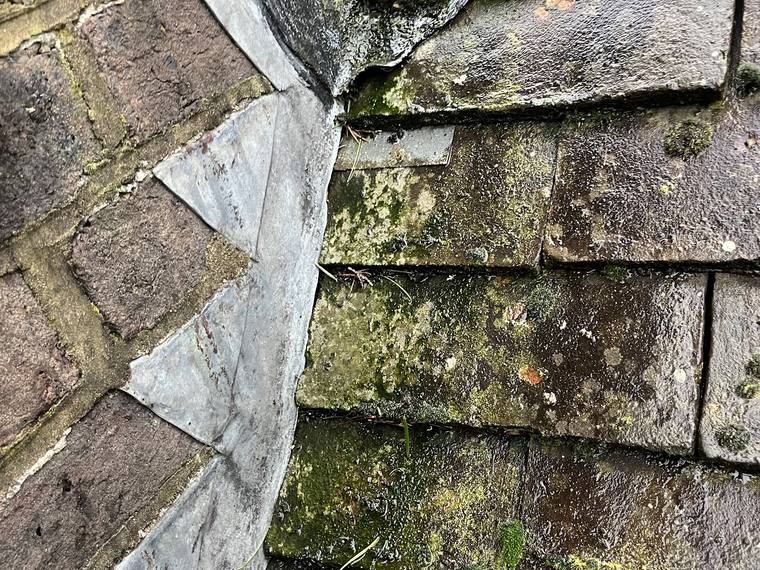
Step flashings cut into the mortar joints, wedged and pointed, with a front apron and a back gutter in the right code of lead for the width. This is the detail that stops the wet patch on the chimney breast, and it is the detail cement fillets fail at every winter.
Valleys and parapet gutters
Lead lined valleys and box gutters laid in correct bay lengths with proper laps and expansion, so they move with the seasons instead of splitting. A lead gutter on a Victorian terrace in Reigate or Redhill that was done right will still be there in fifty years.
Welded, not sealed
Corners, seams and awkward junctions are lead welded on site rather than folded and smothered in sealant. A welded joint is one piece of metal. A sealed joint is a leak with a date on it.
Soakers, lead slates and the small stuff
Soakers under every slate or plain tile course against a wall, lead slates round soil pipes and flues, and lead capping to bay tops and porches. Small pieces, but they are where most of the water gets in on an older house.
Asked and answered
Why lead rather than a flashing tape or a cement fillet?
Because lead lasts and the others do not. Self adhesive flashing tapes lift within a few years, and cement fillets crack as the roof and the wall move at different rates. Lead moves with the building, is fully recyclable and, done properly, outlives the tiles around it.
What is lead welding and why does it matter?
Lead welding, or lead burning, fuses two pieces of lead into one with a flame and a lead filler rod. It is how corners, seams and complex shapes get made watertight without relying on sealant. Not every roofer can do it, and it is the reason J&L is asked to sort lead details other people have given up on.
Can you replace lead that has been stolen?
Yes. Lead theft off church halls, outbuildings and flat porch roofs happens around Surrey from time to time. We can replace it like for like, and where an owner would rather not risk it again we can talk through the alternatives and what they will and will not do.
Which code of lead do you use?
It depends on the job. Code 4 is the usual for flashings and soakers, code 5 for valleys, gutters and anything with a longer run or foot traffic. Using a lighter code than the detail needs is a common shortcut and it shows up as splits within a few years.
Do you do lead work on its own, or only as part of a bigger job?
Both. A lot of lead work is a half day or a day on its own, reflashing a chimney or relining one valley. It also comes up on nearly every re-roof and chimney job, and it gets done by the same team rather than subcontracted out.
Lead Work & Welding across east Surrey
Based in Smallfield, just outside Horley, so most of the work is within half an hour of the yard. If your postcode is not on the list, give us a ring anyway.
Planning a lead work job?
Free written estimate, and nothing to pay until you are happy with the job.